Position and Direction
“Where did you leave your shoes?” — “Under the bed,
next to the door!” Every day we tell people where things are and which way to go,
and that is exactly what position and direction are all about.
Position is where something is. We describe it in words, always relative
to something else: left or right, above or
below, in front or behind, next to,
and between.
Position words come in opposite pairs. If the cat is to the
left of the dog, then the dog is to the right of the cat — the same picture,
described from the other side. There is no single "correct" position; it always depends on the
thing you measure from.
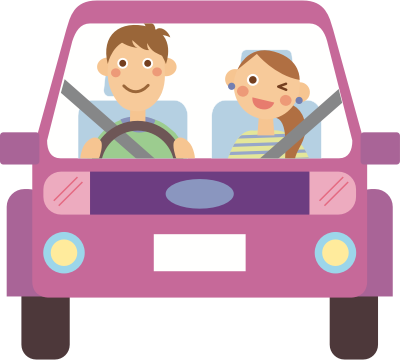
Hold your hands out: your left and right are stuck to
you. Now turn all the way around — what used to be on your left is now on your right!
That is why a driver's "turn left" is the opposite of the passenger walking the other way.
Up/down and the compass directions (North, East, South, West) never
flip like this — they are the same for everyone, however you are facing.
Relative to the middle
Pick a starting point, then everything else is left, right, above or below it. Press the arrows to
step through it.
Direction: which way you move
Direction is which way you move or face — forwards,
backwards, left or right. On a grid we give directions in small steps:
"two steps right, one step up". Each step lands on the next square.
Describing position on a grid this way is the very first step toward the
coordinate plane,
where those steps become numbers.
Turns: how far you spin
A turn is spinning on the spot to face a new way. We measure turns in
quarters of a full circle:
- a quarter turn is 90^\circ (a square corner);
- a half turn is 180^\circ (you face the opposite way);
- a three-quarter turn is 270^\circ;
- a full turn is 360^\circ (right back where you started).
A turn also has a direction. Clockwise is the way a clock's hands move;
anticlockwise is the other way. A quarter turn clockwise and a quarter turn
anticlockwise leave you facing opposite ways.
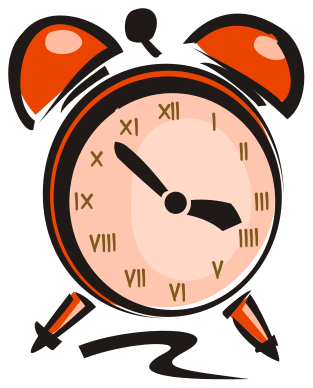
Watch a clock's hands: they sweep from the 12 across to the 3, down to the 6, round to the 9,
and back up. That direction — top, right, bottom, left — is clockwise. Going
the other way (top, left, bottom, right) is anticlockwise. If you stand facing
up and make a quarter turn clockwise, you end up facing right.
Compass directions: North, East, South, West
A compass gives four fixed directions that are the same for everyone:
North, East, South and West.
Going clockwise from the top they spell N, E, S, W — "Never Eat
Shredded Wheat" helps you remember the order. North and South are an opposite pair; so are East
and West.

You don't always need a compass. The sun rises in the East in the morning and
sets in the West in the evening. So at sunrise, point one arm at the sun — that
is East — and North is on your left. People have found their way like this for thousands of
years, long before compasses existed.
Follow the arrow
Here is a grid with a dot dropped on a random square, and an arrow showing which way it is facing.
Read off its direction, then press Refresh for a brand-new one to practise on.
Worked examples
1. Giving directions on a grid. A robot starts in the bottom-left square. To
guide it to a square 3 to the right and 2 up, you say:
"forwards 3, then turn and go up 2" — or simply "3 right, 2 up". Count
the squares as you go; each instruction is one step.
2. Working out a turn. You are facing North and make a
half turn. A half turn is 180^\circ, so you now face
the opposite way: South.
3. Combining turns. You face East and turn a
quarter turn clockwise. Clockwise from East is South, so you end up facing
South. (Anticlockwise instead would have left you facing North.)
- A quarter turn is 90^\circ, not 25 degrees —
"quarter" means a quarter of the whole 360^\circ circle.
- Clockwise follows the clock's hands (top → right → bottom → left).
Anticlockwise is the opposite way — they are easy to mix up.
- Left and right depend on which way you face: turn around and they swap.
North/South/East/West never swap — they are fixed.