Counting sides and corners
Look around and you will spot flat shapes everywhere — a square window, a triangular slice of toast, a round biscuit. To talk about them, we give each one a name, and the name comes from a quick bit of counting.
A 2D shape is a flat shape — one you can draw on a piece of paper and colour in. It has no thickness at all, like a shadow. We do not give a flat shape its name by its colour or its size; a tiny red triangle and a huge blue triangle are both triangles. We name it by counting two things:
- its sides — the straight edges, the lines you would trace with your finger;
- its vertices — the corners, the sharp points where two sides meet. (One corner is a vertex; two or more are vertices.)
Here are the shapes you will meet most often, sorted by how many sides they have:
- a triangle has 3 sides and 3 corners;
- a quadrilateral has 4 sides — a square and a rectangle are both quadrilaterals;
- a pentagon has 5 sides and 5 corners;
- a hexagon has 6 sides and 6 corners;
- an octagon has 8 sides and 8 corners;
- a circle has no straight sides at all — it is one smooth curve with no corners to count.
A flat shape made only of straight sides is called a polygon. So a triangle, a square, a pentagon, a hexagon and an octagon are all polygons — but a circle is not, because part of it is curved.
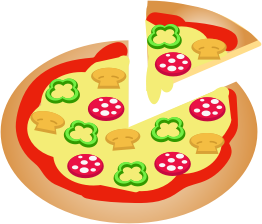

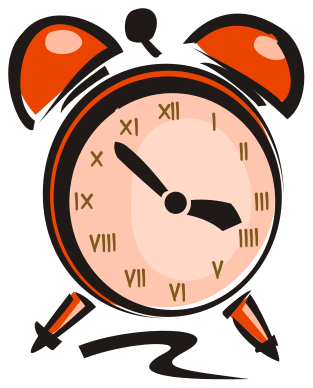
Once you know the names, you start to spot shapes everywhere. A slice of pizza is a triangle — count its three straight edges. The face of a clock is a circle, with no corners at all. A road sign that says STOP is an octagon, with eight sides. Look around your room right now: a window might be a rectangle, a slice of toast a square, a slice of watermelon a triangle. How many can you find?