Numerals and Number Words
Numbers are all around you — a big 5 on a birthday cake, everyone singing
"five!", and five candles to blow out. Written, spoken, or counted on your fingers, it is the
same number each time.
A number is an idea: how many. That one idea wears three different
outfits, and they all mean exactly the same thing:
- the numeral — the digit we write: 5
- the number word — the name we say: “five”
- the quantity — that many real things: ●●●●●
Once you can
count
a group of things, you can give that group a spoken name and a written symbol.
The numeral 5, the word “five”, and five apples are not
three different numbers — they are three ways of pointing at the same
amount. Learning numbers means learning to slide smoothly between the three: see a
group and know its word, hear a word and write its numeral, read a numeral and
picture the pile.
One amount, three names — together
Here is the number five, shown all three ways at once. Count the apples, look at
the digit, and read the word. They line up perfectly:
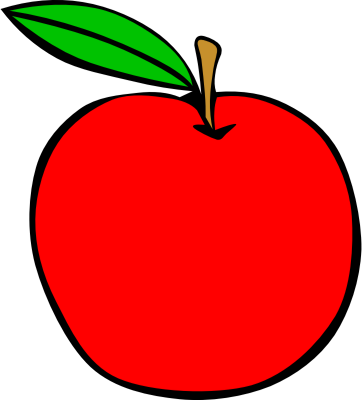
\underbrace{5}_{\text{numeral}} \;=\; \underbrace{\text{“five”}}_{\text{word}} \;=\; \underbrace{\text{five apples}}_{\text{quantity}}
If you swapped the apples for ducks, the picture would change but the number would
not — five ducks is still five. The numeral and the word don't care what
you counted, only how many there were.
Imagine a farmer with this many sheep:
 .
To remember the flock tomorrow, the farmer could draw four sheep again — slow! — or
just write the tidy little mark 4. A numeral is a
shorthand for a quantity, so we can store and compare numbers without dragging the
real things around. That is the whole reason humans invented digits.
.
To remember the flock tomorrow, the farmer could draw four sheep again — slow! — or
just write the tidy little mark 4. A numeral is a
shorthand for a quantity, so we can store and compare numbers without dragging the
real things around. That is the whole reason humans invented digits.
Watch them line up. Each time you press play we pick a new number, count out
that many dots, write its numeral, and say its word aloud — so you can see
all three match.
See it: count, then name
Count the cartoons, and the diagram shows you the matching numeral
and number word underneath. Press Refresh for a
fresh group — a different amount and a different thing to count, but always the same
three-ways-of-one-number idea.
The tricky teen words
Most number words are friendly, but the “teens” — the numbers from
eleven to nineteen — try to trip you up. Two of them barely sound like numbers at
all: eleven (11) and twelve (12). You simply have
to learn those by heart.
From thirteen onward there is a pattern, but it runs
backwards from how you write it. The word says the ones first and the
“ten” second:
- 13 = thir-teen (three and ten)
- 14 = four-teen (four and ten)
- 15 = fif-teen (five and ten)
- 16 = six-teen, and so on up to nineteen.
So “-teen” is just a sleepy way of saying “and ten”. Fourteen means
four plus ten, which is fourteen things in total.
- We say “thirteen”, never “ten-three” — the ones part
comes first and “three” gets squashed into “thir”. Same with “fifteen”, not
“five-teen”.
- The numeral, the word, and the count are three names for one amount.
14, “fourteen”, and fourteen apples are equal — pick
whichever is handy, and you can always swap to another.
Worked examples
1. Numeral → word → quantity. You see the digit
8. Its word is “eight”, and it stands for this many things:

2. Quantity → word → numeral. Count these stars: one, two, three…
there are six. The word is “six”, so we write the numeral 6.

3. A teen. You hear the word “fourteen”. Take it apart: four
and teen (ten), so it is four-and-ten. We write the numeral
14.
What if there is nothing to count? That amount also gets a numeral and a word:
the numeral is 0 and the word is “zero”. An empty plate
with no cookies on it —
 — has zero cookies. Zero is a real number word, meaning “none”, and it becomes a
hard worker later when you learn
place value.
— has zero cookies. Zero is a real number word, meaning “none”, and it becomes a
hard worker later when you learn
place value.
Khan Academy shows how to write numbers in words here: