Counting
Counting is how we answer the question “how many?”. How many toys are in
the box? How many stairs to the top? How many sweets in the jar? Every time you want a
number for a pile of things, you count them.
The trick is simple but powerful: point at each thing once and say the
number names in their special order — one, two, three, four, five, … — never
skipping one and never saying the same one twice.
This is the very first root of the tree of knowledge — almost everything else in
mathematics grows from being able to count.
Not at all! You can count anything. Three ducks
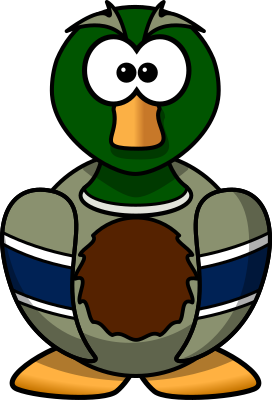 are exactly the same amount as three frogs
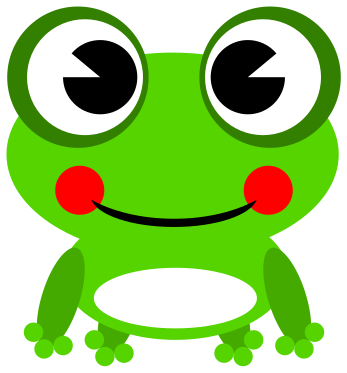 .
The number 3 doesn't care whether it is counting ducks, frogs,
stars or stairs — “three” always means the same amount.
.
The number 3 doesn't care whether it is counting ducks, frogs,
stars or stairs — “three” always means the same amount.
One thing, one number
Watch the frogs. Each time a new frog hops in, we say the next number. One
frog, one number — the count goes up by exactly one every single time. That is the heart of
counting: one-to-one. Touch a thing, say a number; touch the next thing,
say the next number.
Touch and count
Here is a pile of counters. Touch each one with your finger and say its number out loud:
the little number under each counter is the one you say as you reach it. The very last
number you say is the answer. Press Refresh for a brand-new pile to count.
Count along a number line
Numbers also live in a row called a number line. Counting is just
hopping along it, one step at a time. Each hop is “one more”. Press the
steps to hop from 1 all the way to 10.
Count in a ten-frame
A ten-frame is a box with two rows of five. We fill it from the top-left,
one dot at a time. It helps you see a number without counting every dot from the
start — your eyes learn what “seven” looks like. Count the dots below:
The last number is “how many”
Here is the most important secret in counting: the last number you say
tells you how many there are. You don't have to count again — the final
word is the answer.
Count these ducks with your finger:
“One, two, three, four.” The last word was four, so there
are 4 ducks.
Now the birds:
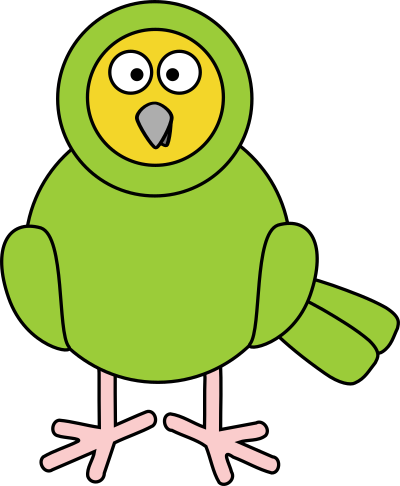
“One, two, three.” So there are 3 birds — even
though birds and ducks look nothing alike, “three” and “four” mean the same amounts every
time.
The two traps that trip up every new counter:
- Count each thing once. Don't skip one, and don't count the same one
twice. Touch each thing as you say its number so you never lose your place.
- The last number tells you how many. When you stop, the final number
you said is the answer — you don't start over to find the total.
Zero! Zero means “none at all” — an empty box, no frogs, nothing to
count. We start saying number names at one because we only count things that are
actually there, but the number line really begins at 0.
Forever! However big a pile of stars
 you have, you can always add one more star and say one more number. There is no biggest
number — you would never run out, no matter how long you counted.
you have, you can always add one more star and say one more number. There is no biggest
number — you would never run out, no matter how long you counted.
See it explained