How Many In All
You tip out your bag of marbles to check how many you have, or count the candles to go on a
birthday cake. Each time you point and say the numbers — and the answer is simply the
last number you land on. That handy trick has a name.
When you count a group of
things, something special happens at the end: the very last number you say
tells you how many there are altogether. That last number names the size of the
whole group.
So if you count five frogs — "one, two, three, four, five" — you don't
just stop at 5. The 5 means there are
5 frogs in all. Every number you said along the way was
only a stepping stone; the last one is the answer to the question
"how many?". The grown-up name for this idea is cardinality.
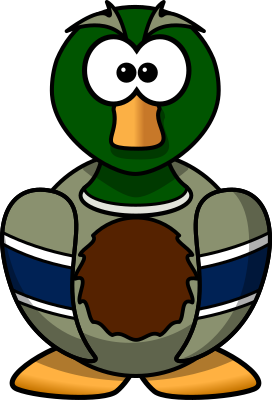
Point at each duck as you say "one, two, three, four". Each number tags
one more duck, so by the time you reach the last duck the number you say has
counted all of them. That's the trick: counting in order means the final
number has already included every single thing — so it is the total. There are
4 ducks.
Watch: things pop in one at a time and the count climbs with them. When the last one
appears, look at the final number — it lights up to show how many in all. Replay
it and a different amount appears each time.
Three ways to see "five"
However we show a number, "how many" stays the same. Here is 5
three different ways — five loose counters, five dots filling a
ten-frame, and a hop to 5 on the
number line. Count each one: you always land on five.
A ten-frame is just two rows of five boxes. Filling five of them shows
5 as "one full row" — handy for spotting amounts in a glance
without re-counting every time.
On the number line, "how many" is how far along you have hopped.
Five steps from 0 land you on 5.
Counting in a different order
Here is the surprising, wonderful fact: it doesn't matter which thing you count
first. Start with the cookie on the left, or the one on the right, or jump about in the
middle — as long as you count each cookie once and don't miss any, you
always end on the same last number. The amount of a group never depends on the order you
count it.

Count these left to right: "one, two, three, four, five, six". Now count
them right to left — you still say "six" at the end. Slide them into a circle, a pile, or
a wiggly line and count again: still 6. Moving the cookies
around, or counting them in a new order, cannot change how many there are.
You try: count the group
Press Next to count the counters one at a time — a number drops under each
one as you tag it. When you reach the last counter, that number is the answer: it tells you
how many in all. Press Refresh for a brand-new group to
count.
A few worked examples
-
Count three cats: "one, two, three." The last number is
3, so there are 3 cats in all.
-
Count seven stars by starting in the middle and hopping about — as long as you tag each
star once, you still finish on 7: 7 stars.
-
Count an empty plate: you never get to say a number at all, so there are
0 — none. Zero is a "how many" too.
Two traps that trip up new counters:
-
"How many" is the last number you say, not the first.
Counting four ducks ends on 4 — the answer is four, not
"one" because that's where you started.
-
Moving the things around does not change how many. Spreading six
cookies far apart doesn't make "more"; pushing them into a tight pile doesn't make
"fewer". Re-count and you'll always get 6.
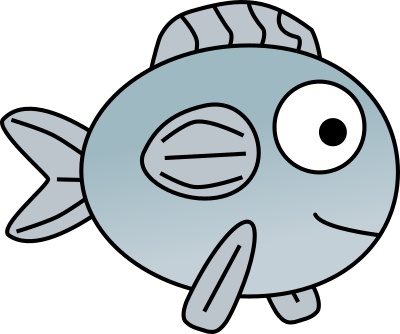 vs
vs
The bunch on the left and the spread-out row on the right both have
3 fish. A line of things looks bigger because it takes
up more space — but space isn't the same as "how many". Always count to be sure; your eyes
can be fooled, but counting can't.
The number you land on at the end is the answer to "how many?". Counting the same group
again, even in a different order, always ends on the same last number — that's the amount
of the whole group.
Khan Academy counts small groups and says how many here: